Learn how modern plate bending machines improve accuracy, productivity and flexibility in industrial metal forming operations.
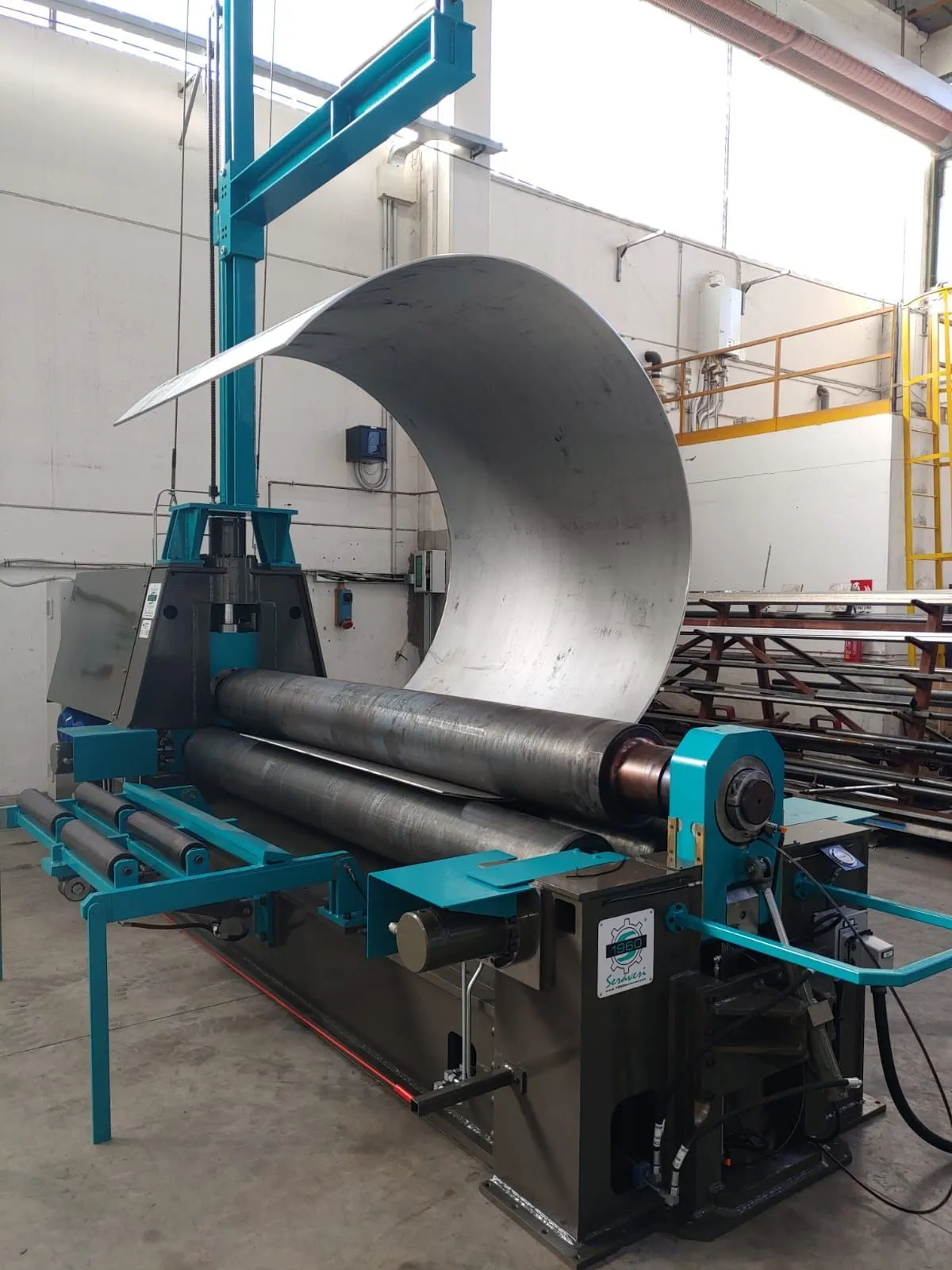
A plate bending machine is a specialised industrial system designed to bend and form metal plates into cylindrical, conical and curved components. These machines play a crucial role in modern manufacturing, allowing companies to produce high-quality metal structures for pressure vessels, tanks, shipbuilding, wind energy and heavy fabrication projects.
While a plate rolling machine represents the broader technology used in industrial plate forming, a plate bending machine focuses specifically on achieving precise curvature, repeatability and production efficiency.
What Is a Plate Bending Machine?
A plate bending machine applies controlled force to a metal plate through a system of rollers. By progressively deforming the material, the machine creates the desired radius while maintaining dimensional accuracy and structural integrity.
Modern machines can process carbon steel, stainless steel, aluminium and special alloys across a wide range of thicknesses and plate dimensions.
How a Plate Bending Machine Works
The bending process begins by positioning the plate between the rolls. Through a combination of pressure and controlled movement, the machine gradually bends the material until the required geometry is achieved.
Advanced CNC systems enable operators to manage rolling sequences, pre-bending operations and repeat production cycles with exceptional precision.
Main Types of Plate Bending Machines
3 Roller Bending Machines
3 roller bending machines are widely used because of their versatility and ability to handle a broad range of applications. They are suitable for workshops that require flexibility and variable production.
4 Roll Plate Bending Machines
4 roll plate bending machines provide higher productivity, simplified plate positioning and more efficient pre-bending operations.
These machines are often preferred for medium and large-scale production environments.
Hydraulic Plate Bending Machines
Hydraulic plate bending machines offer the power required to process thick plates and high-strength materials while maintaining excellent control throughout the forming process.
Industrial Applications
Pressure Vessel Manufacturing
Pressure vessel manufacturers rely on plate bending machines to produce cylindrical shells and structural sections that comply with strict quality standards.
Tank Production
Storage tanks, process vessels and industrial containers require accurate bending operations to ensure dimensional consistency and reliable assembly.
Shipbuilding and Offshore Engineering
Plate bending technology is extensively used in the construction of hull sections, decks and structural elements for marine applications.
Wind Energy and Power Generation
The production of wind towers and large cylindrical structures requires machines capable of processing heavy steel plates with high precision.
Benefits of a Modern Plate Bending Machine
- High bending accuracy.
- Improved production efficiency.
- Reduced material waste.
- Repeatable manufacturing processes.
- Capability to process different materials and thicknesses.
- Integration with CNC and automation systems.
How to Choose the Right Plate Bending Machine
Selecting the right machine requires evaluating several technical factors, including maximum plate thickness, working width, material type, required bending diameter and production volume.
Manufacturers should also consider future growth plans, automation requirements and the complexity of the components they intend to produce.
For highly specialised applications, companies may require special plate rolling machines developed to meet unique production requirements.
The Importance of Precision in Plate Bending
Precision is one of the most critical factors in industrial plate forming. Even minor deviations can affect assembly quality, welding operations and final product performance.
Modern plate bending machines are therefore designed to maximise repeatability, minimise operator intervention and ensure consistent results throughout the production cycle.
Plate Bending Machines and Modern Manufacturing
As manufacturing standards continue to evolve, plate bending machines remain a strategic investment for companies seeking greater efficiency, quality and competitiveness.
By combining advanced engineering, CNC technology and robust construction, modern plate bending machines enable manufacturers to meet the demanding requirements of today's industrial markets.