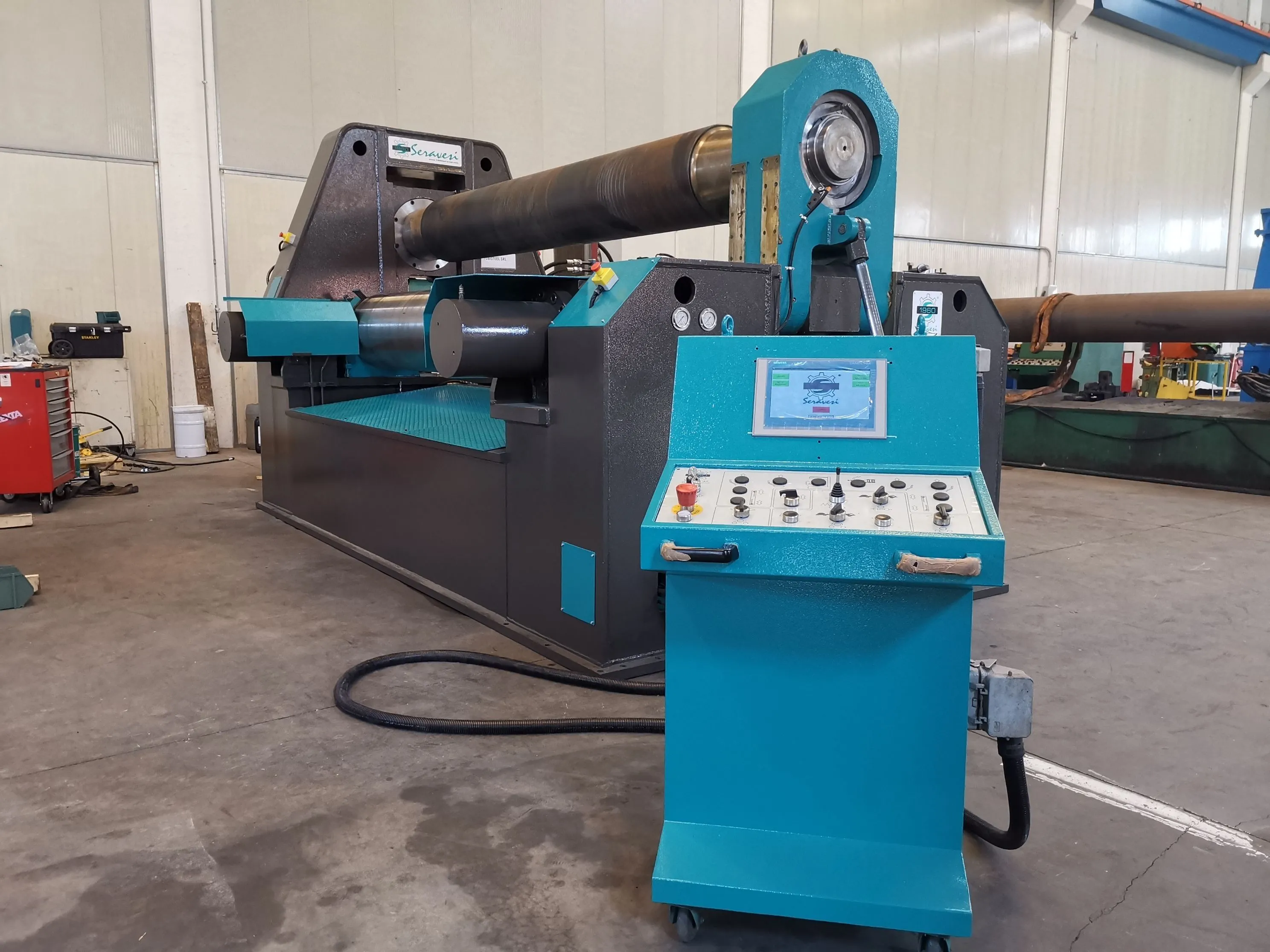
Plate rollers, also known as plate bending machines or plate rolls, are mechanical devices that excel in bending and shaping metal plates. metal bending machines, sheet metal forming.
Plate rollers are essential machines in the world of metal fabrication, offering unmatched efficiency in transforming flat metal sheets into cylindrical, conical, or other curved forms. Their versatility and precision make them indispensable across industries such as shipbuilding, aerospace, construction, and heavy machinery manufacturing. In this article, we will explore in detail what a plate roller is, its working principle, the types available, their advantages, and how to choose the right one for your needs. We will also cover the manufacturing process, practical applications, and maintenance tips, concluding with a set of frequently asked questions to clarify common doubts. Whether you are an industry professional or simply interested in understanding how these machines shape modern engineering, this guide will provide a comprehensive overview.
- What is a plate roller?
- What is the working principle of plate rollers?
- Uses of plate rollers?
- Types of plate rollers?
- What are the advantages and benefits of plate rollers?
- Manufacturing process of plate rollers?
- Applications of plate rollers?
- How to choose the right plate roller?
- Maintenance tips for plate rollers?
- Frequently Asked Questions (FAQ) about plate rollers
What is a plate roller?
A plate roller is a specialized machine designed to bend flat metal sheets into curved or cylindrical shapes with high precision. Unlike manual bending tools, plate rollers are engineered to handle large sheets and heavy-duty materials such as steel, stainless steel, and aluminum. Their design typically features multiple rollers aligned in a frame, which apply controlled pressure to the sheet to achieve the desired curvature. Depending on the model, plate rollers can be manually operated, hydraulically powered, or fully CNC-controlled, each offering different levels of efficiency and precision. Modern plate rollers are capable of handling complex geometries and repeated production runs with minimal variation, making them essential in industries where consistency, strength, and dimensional accuracy are crucial. In essence, plate rollers bridge the gap between raw material and finished product, turning flat sheets into functional, high-quality components.
What is the working principle of plate rollers?
The working principle of plate rollers is based on the controlled deformation of metal sheets through compression and rolling. A sheet is placed between rollers, and as the rollers rotate, they apply uniform pressure that gradually bends the sheet into the desired radius. The machine achieves this by adjusting the position of one or more rollers, which changes the bending angle and curvature. In a typical setup, the top roller provides the primary force, while the lower and side rollers adjust the shape and tension of the sheet. Hydraulic or CNC plate rollers allow precise control of roller movement, ensuring exact and repeatable results even for complex curves or thick plates. This principle eliminates the need for multiple passes and reduces material stress, preventing cracks and maintaining thickness uniformity. It is a combination of mechanical force and advanced control systems that allows plate rollers to produce consistent, high-quality results at industrial scale.
Uses of plate rollers?
Plate rollers are widely used in industries where curved or cylindrical metal components are required. In shipbuilding, they are essential for creating hull sections and structural reinforcements. In the aerospace sector, plate rollers help produce lightweight but strong components for fuselages and engine casings. The construction industry relies on them for fabricating columns, pipes, and large structural supports. Energy industries use plate rollers for manufacturing wind turbine towers, oil storage tanks, and pressure vessels. They are also used in architectural projects for custom facades, sculptures, and decorative elements. Beyond heavy industries, smaller workshops use plate rollers for producing ducts, boilers, and tailored cylindrical products. This versatility makes plate rollers invaluable wherever precision bending of sheet metal is required, from massive industrial plants to small-scale fabrication businesses. Their adaptability ensures they remain central to modern manufacturing processes worldwide.
Types of plate rollers?
There are several types of plate rollers, each designed for specific applications and levels of precision. The most common are 2-roll, 3-roll, and 4-roll plate rollers. Two-roll machines are typically used for lighter materials and small-scale operations, offering simplicity and cost-effectiveness. Three-roll plate rollers come in pyramid or variable geometry designs and are suitable for medium to heavy-duty work. Four-roll plate rollers provide the highest level of control, as they can perform pre-bending and rolling in a single operation, reducing handling time and increasing accuracy. Within these categories, plate rollers may be manually operated, hydraulically powered, or fully CNC-controlled, depending on the required precision and production volume. Some specialized models are designed for cone rolling or heavy-thickness plates, ensuring adaptability across different industries. Choosing the right type of plate roller depends largely on the size, thickness, and complexity of the sheet metal being processed.
What are the advantages and benefits of plate rollers?
Plate rollers offer numerous advantages that make them indispensable in metalworking. They provide consistent bending results, reducing the risk of errors and material waste. Modern CNC plate rollers enhance efficiency by automating processes and allowing operators to program precise parameters for repeated production. This not only lowers labor costs but also ensures high-quality, identical results across multiple batches. Another key advantage is versatility, as plate rollers can handle a wide range of materials, thicknesses, and diameters, adapting to different project requirements. Their ability to perform pre-bending minimizes flat ends, ensuring cleaner and more uniform cylindrical shapes. Additionally, plate rollers improve structural integrity by producing smooth, even bends without introducing weaknesses in the material. By combining precision, efficiency, and adaptability, plate rollers significantly contribute to productivity and quality in both large-scale industrial operations and smaller fabrication shops.
Manufacturing process of plate rollers?
The manufacturing process of plate rollers involves advanced engineering and robust construction techniques to ensure durability and precision. The frames are typically built from high-strength steel to withstand immense pressure during operation. Rollers are made from hardened alloy steel and often undergo heat treatment or surface coating to resist wear and extend service life. Hydraulic systems, motors, and CNC controls are integrated to provide accurate movement and force distribution. During assembly, strict alignment and calibration processes are applied to guarantee smooth operation and precise results. Quality testing includes load trials, endurance checks, and dimensional verification, ensuring that each plate roller meets industrial standards. Manufacturers also focus on incorporating safety features, ergonomic controls, and energy-efficient systems to enhance performance and operator comfort. This meticulous process ensures that plate rollers deliver long-lasting reliability in demanding industrial environments.
Applications of plate rollers?
Plate rollers are applied across a wide range of industries due to their ability to produce precise cylindrical and curved components. In heavy manufacturing, they are used for fabricating boilers, storage tanks, silos, and large pipes. In energy, they play a crucial role in constructing wind towers, nuclear power components, and oil refinery equipment. The aerospace and automotive sectors use plate rollers to create lightweight yet durable parts that enhance performance and safety. In civil engineering, they are vital for producing structural supports, bridges, and architectural steel elements. Additionally, custom fabrication workshops rely on plate rollers for producing decorative metalwork, artistic installations, and small-batch specialized products. This wide range of applications highlights the versatility and importance of plate rollers in shaping the infrastructure, technology, and everyday products we depend on.
How to choose the right plate roller?
Selecting the right plate roller requires careful evaluation of several factors. The material type, sheet thickness, and width are primary considerations, as different machines are optimized for specific ranges. Production volume is another key factor: manual or hydraulic models may suffice for low to medium runs, while CNC machines are ideal for high-volume, high-precision production. The complexity of the desired shapes also plays a role, as advanced machines with multiple rollers or programmable controls can handle cones and complex geometries more effectively. Additional features such as adjustable angles, automation, and integrated safety systems can further enhance productivity and operator comfort. Finally, evaluating the reputation of the manufacturer, availability of technical support, and after-sales service ensures long-term reliability. By balancing technical requirements with budget and production goals, businesses can choose the plate roller that best suits their needs.
Maintenance tips for plate rollers?
Regular maintenance of plate rollers is essential to ensure consistent performance and extend service life. Operators should frequently lubricate moving parts and bearings to reduce friction and prevent wear. Rollers must be inspected for signs of damage or uneven wear, and replaced if necessary to maintain precision. Hydraulic systems should be checked for leaks, fluid levels, and pressure consistency, while electrical components must be tested for functionality. Keeping the machine clean from dust, metal shavings, and debris is critical for smooth operation. For CNC plate rollers, software updates and calibration cycles are necessary to maintain accuracy and efficiency. Adhering to the manufacturer’s recommended maintenance schedule not only reduces downtime but also prevents costly repairs and ensures workplace safety. Preventive maintenance ultimately protects the investment and guarantees that the plate roller continues to deliver reliable results over many years of use.
Frequently Asked Questions (FAQ) about plate rollers
What is the difference between a 3-roll and a 4-roll plate roller?
A 3-roll plate roller uses three rollers to bend the sheet, often requiring repositioning for pre-bending, while a 4-roll machine allows pre-bending and rolling in one pass, providing higher precision and efficiency.
Can plate rollers handle stainless steel?
Yes, plate rollers can process stainless steel as well as other metals like carbon steel, aluminum, and alloys, provided the machine is rated for the material thickness and hardness.
Are CNC plate rollers worth the investment?
CNC plate rollers are ideal for high-volume or precision applications. They reduce human error, improve efficiency, and allow for repeatable results, making them highly valuable for modern fabrication shops.
How long does a plate roller last?
With proper maintenance, plate rollers can last for decades. Durability depends on build quality, frequency of use, and adherence to recommended service practices.
Do plate rollers require special training?
While basic operation can be learned quickly, advanced machines—particularly CNC plate rollers—require operator training to maximize safety, productivity, and accuracy.