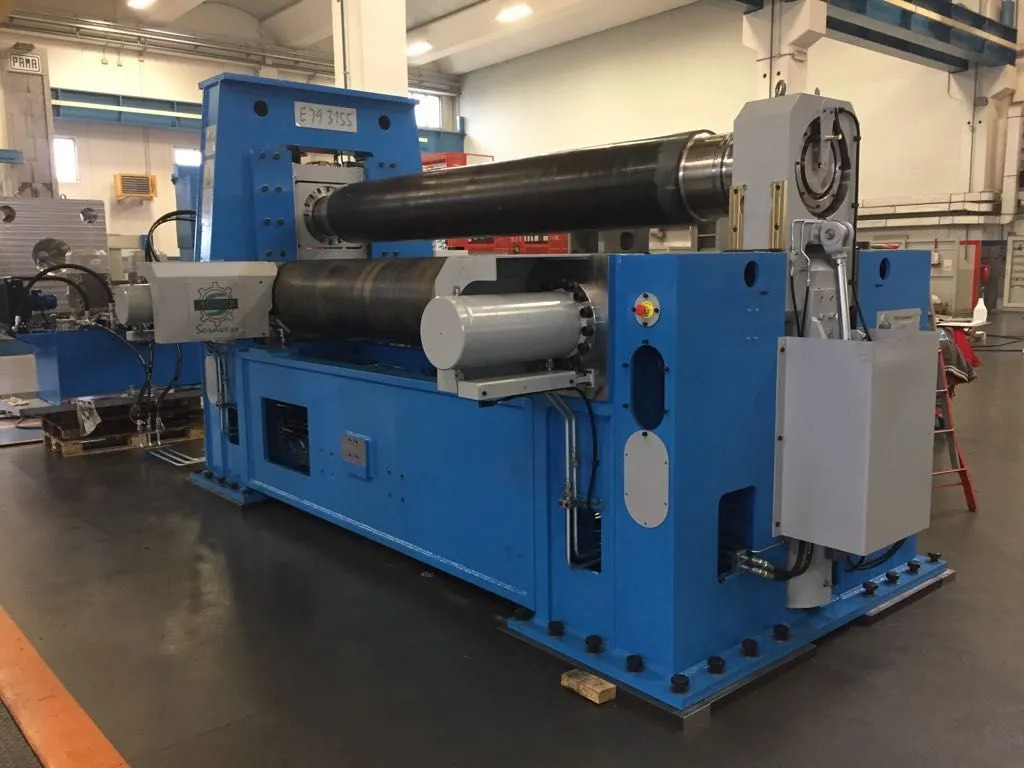
Discover Roll Bending Machines: advanced metal forming equipment for precise curves, high efficiency, durability and applications across industries. roll bending machine, roll bending machines, metal forming machines, industrial bending equipment, plate rolling
Roll bending machines are among the most versatile and powerful tools in modern metalworking. They enable manufacturers, fabricators, and engineers to transform flat sheets and plates into perfectly curved structures with strength, accuracy, and consistency. From shipyards to aerospace plants, from architectural workshops to energy facilities, these machines are considered the backbone of many production processes. Their ability to combine precision with productivity makes them indispensable across industries that rely on durability and complex geometries. This guide will cover what a roll bending machine is, how it works, its uses, types, advantages, manufacturing process, applications, selection criteria, maintenance practices, and answer the most common FAQs professionals have about these machines.
- What is a roll bending machine?
- What is the working principle of roll bending machines?
- Uses of roll bending machines
- Types of roll bending machines
- What are the advantages and benefits of roll bending machines?
- Manufacturing process of roll bending machines
- Applications of roll bending machines
- How to choose the right roll bending machine?
- Maintenance tips for roll bending machines
- Frequently Asked Questions (FAQ) about roll bending machines
What is a roll bending machine?
A roll bending machine is an industrial device specifically designed to bend metal sheets and plates into cylindrical, conical, or curved shapes using multiple rolls. It consists of a robust steel frame, precision-engineered rollers, and power systems (hydraulic, electric, or CNC-driven) that apply controlled pressure. Unlike simpler forming tools, roll bending machines can handle large thicknesses and wide plates, producing seamless curves without welding or cutting. Their adaptability allows them to shape materials such as carbon steel, stainless steel, aluminum, and alloys with consistent results. For industries that demand repeatability and strength, these machines are not just useful—they are essential for high-quality production.
What is the working principle of roll bending machines?
The working principle of roll bending machines relies on controlled plastic deformation of metal. Typically arranged with three or four rolls, the machine positions the sheet between them, applying force as the rolls rotate to bend the material. The top roll usually applies downward pressure, while the lower rolls provide support and drive the sheet forward. By adjusting the roll positions, operators achieve the desired curvature, whether it is a tight radius, a large arc, or a cone. Advanced CNC models calculate parameters automatically, ensuring precision and reducing human error. This principle ensures uniform bending without weakening the structural integrity of the plate, minimizing flat ends and maximizing accuracy.
Uses of roll bending machines
Roll bending machines serve countless purposes in metalworking. They are used to produce tanks, pressure vessels, wind towers, and silos for heavy industry. In shipbuilding, they shape the curved steel plates that form hulls and decks. In construction, they allow the creation of architectural façades, arches, and structural frameworks. The aerospace and automotive industries rely on them for lightweight yet strong components. Even in smaller workshops, they are used to craft ducts, artistic metalwork, and custom fabrications. The combination of versatility, scale, and precision makes them vital in both mass production and specialized custom manufacturing.
Types of roll bending machines
There are several types of roll bending machines designed for different tasks. Three-roll machines, arranged in pyramid or initial-pinch configurations, are common for general applications. Four-roll machines offer superior precision and allow pre-bending and rolling in a single pass, increasing productivity. Manual roll benders are suitable for workshops or low-volume work, while hydraulic and CNC-controlled machines are preferred for high-volume industrial production. Some models specialize in plate rolling, others in pipe or section bending, ensuring solutions for virtually every need. Choosing the right type depends on material thickness, dimensions, and production goals.
What are the advantages and benefits of roll bending machines?
Roll bending machines deliver key advantages that make them a strategic investment. They improve efficiency by reducing manual labor and eliminating the need for welding joints in curved structures. They guarantee precision, producing repeatable results across multiple cycles. CNC automation minimizes waste and ensures compliance with strict tolerances. Their flexibility allows handling of various materials and thicknesses, enabling manufacturers to serve diverse markets. By maintaining structural strength during bending, they also increase safety and longevity of the final product. For companies aiming to innovate, roll bending machines open design possibilities that manual processes cannot match.
Manufacturing process of roll bending machines
The manufacturing process of roll bending machines requires advanced engineering and high-quality materials. The frames are fabricated from reinforced steel to handle extreme loads. The rolls are made from heat-treated alloy steel, ensuring durability and wear resistance. Precision machining guarantees accurate alignment, while hydraulic or electric drive systems are integrated for reliable power. CNC controllers, sensors, and safety systems are added to enhance accuracy and operator protection. Each machine undergoes rigorous testing for load, alignment, and safety before leaving the factory. This ensures long-term performance in demanding industrial environments.
Applications of roll bending machines
Roll bending machines are applied in diverse industries worldwide. In energy, they form wind towers, pipelines, and pressure vessels. In construction, they enable stadium roofs, bridges, and curved façades. In transport, they are used for shipbuilding, railway production, and aircraft components. Smaller businesses use them for HVAC ducts, artistic projects, and prototyping. Their adaptability makes them relevant for both large-scale infrastructure projects and niche custom designs. Essentially, any sector requiring precision curved metal relies on roll bending technology.
How to choose the right roll bending machine?
Choosing the right roll bending machine involves evaluating material type, thickness, plate width, and production volume. For small workshops, manual or entry-level hydraulic machines may suffice. For industrial operations requiring speed and accuracy, CNC four-roll machines are recommended. Consider the bending radius, machine flexibility, and additional features like automatic feeding, cone rolling capability, or programmable cycles. Beyond technical specs, factors such as manufacturer reputation, availability of spare parts, training, and after-sales support are crucial. Investing wisely ensures long-term productivity and a high return on investment.
Maintenance tips for roll bending machines
Maintaining roll bending machines is essential for reliability and longevity. Regular lubrication of moving parts reduces wear. Rolls should be inspected frequently for damage or uneven surfaces. Hydraulic systems must be checked for leaks and pressure levels. Electrical and CNC components require software updates and calibrations. Cleaning after each use prevents debris buildup, which can impact accuracy. Scheduled preventive maintenance not only reduces downtime but also extends the machine’s lifespan, ensuring consistent high-quality performance in production environments.
Frequently Asked Questions (FAQ) about roll bending machines
Can roll bending machines bend stainless steel?
Yes, most modern roll bending machines can handle stainless steel, provided the machine’s capacity matches the thickness and hardness of the material.
What is the difference between a three-roll and a four-roll machine?
A three-roll machine often requires repositioning for pre-bending, while a four-roll machine can clamp and bend in one pass, increasing precision and efficiency.
Are CNC roll bending machines worth it?
Yes, CNC machines are ideal for companies that need repeatability, precision, and efficiency in high-volume production, reducing errors and waste.
Can roll bending machines produce conical shapes?
Yes, by adjusting the roll positions, operators can produce conical as well as cylindrical forms, making them versatile for many industries.
How long does a roll bending machine last?
With proper care and preventive maintenance, a roll bending machine can last several decades, depending on usage intensity and build quality.